
What the 4pm Seating Means for Thanksgiving Dinner in NYC
Most New York restaurants drop flexible reservations on Thanksgiving and run fixed seatings instead. The 4pm wave is the first of them: the earliest standard slot of the day, and usually the cheapest. Whether it suits you depends on how the later waves are priced and what they put on the table.
A fixed seating changes almost every practical detail of the evening. With an open reservation you pick a time and order a la carte; with a 4pm booking you accept an arrival window, a set menu, and a table for roughly two hours. Each turn of the room can carry its own price, and that is where the second tier comes from.
The second tier means the higher-priced seatings later in the day, most often the 6pm to 8pm blocks. They cost more because demand peaks then and because the menu is usually richer: extra courses, a carving station, or premium seafood added to the base turkey menu. Same restaurant, same holiday. What changes is the hour and the food.
Choosing between them comes down to what you want from the evening. Take the 4pm slot for the lower per-person price, a calmer room, and an early night home. Take the later tier if a 7pm start and a longer, more elaborate menu matter more. Either way, confirm whether the quoted price includes tax and gratuity, and check the cancellation window before you commit, since holiday seatings are usually prepaid. Lining up a sample seafood menu against a holiday prix fixe makes the tier jump easier to see.
How Thanksgiving Seating Times and Table Turns Actually Work
On a normal Saturday a restaurant sells you a table for as long as the kitchen can keep pace: reservations land every fifteen minutes and the room breathes in and out all evening. Thanksgiving doesn’t work that way. Because nearly every table eats the same prix fixe menu at roughly the same speed, most dining rooms switch to fixed seating windows, defined slots such as noon, 2pm, 4pm, 6pm and 8pm, each with a set arrival time and a set duration. Nothing rolls. You aren’t booking “around 7-ish”; you’re booking a position in a wave, and each wave starts when the previous one ends. That is the structure you’re browsing when Thanksgiving restaurant reservations NYC listings offer times in clusters instead of every quarter hour.
A holiday prix fixe turn typically runs 90 to 150 minutes, against 60 to 75 for an a la carte dinner. Three courses instead of an open menu, larger average party sizes, slower lingering, and a kitchen firing the same dishes for a full room at once all stretch the clock. Turn time drives everything downstream. A two-hour turn lets the room reset three times between 4pm and 10pm; a 150-minute turn fits a third wave only if the first two run tight.
Once you know the turn time, the room’s capacity for the evening is arithmetic: seats multiplied by turns. A 120-seat dining room running three waves is selling roughly 360 covers. Run one long continuous service instead and every party lands in the same 5-to-7pm bottleneck: the kitchen gets hit when it can least absorb it, staff work a fourteen-hour shift, half the room sits idle by 9pm, and there’s no second seating left to sell. Waves let the kitchen batch identical courses, reset between seatings, and give servers a repeatable script, all of which shortens each turn and gets the food out hot.
The 4pm seating anchors the whole schedule because it sets the clock for every turn after it. If the 4pm wave sits ten minutes late and runs twenty minutes over, the 6:30 wave boards late, the 8:30 wave boards later, and the final turn gets compressed into whatever time remains. That is why hosts guard the first seating hardest. For you, the practical consequence is simple: treat seating times as appointments rather than suggestions. Pick the wave that matches your appetite and patience, arrive on time so your own turn isn’t squeezed at the end, and if you want a long, unhurried table, book a later wave rather than hoping the room flexes for you.
Typical Thanksgiving Seating Windows in NYC and Their Price Positions
The seating time tells you when you sit down; the window and turn time tell you how long the table is yours; the last columns show how menu format, price tier, and booking pressure shift as the clock moves later. Read every cell as a typical range rather than a promise, since windows, formats, and pricing vary from restaurant to restaurant and from menu to menu.
| Seating Time | Usual Seating Window and Turn Time | Typical Menu Format | Price Tier Position | Booking Pressure | Suits Best |
|---|---|---|---|---|---|
| Early afternoon (1:00-2:00pm) | Sits 1:00-2:15pm at some spots; table held about 1.5-2 hours | Shorter prix fixe or lunch-style menu | First tier, value end of the range | Light to moderate; often bookable later | Travelers, families with small kids, anyone who wants the evening free |
| 4:00pm | Sits 3:45-4:15pm; table held roughly 2 hours | Standard prix fixe, three courses or buffet | First tier (the earliest tier) | Steady; prime evening slots go first | Families, out-of-town guests, diners who want to be home before dark |
| 5:00-5:30pm | Sits 5:00-5:40pm; table held about 2 hours | Full prix fixe, sometimes buffet or family-style | Borderline first and second tier | Very high; the classic family slot | Mixed-age groups juggling naps or early bedtimes |
| 6:30-7:00pm | Sits 6:30-7:15pm; table held roughly 2 hours | Fuller prix fixe, often with add-ons | Second tier, occasionally third | High but slightly softer than 5pm | Friend groups, couples, diners who want a real night out |
| 8:00pm or later | Sits 8:00-8:45pm; table held about 2 hours | Late prix fixe, sometimes a lighter or a la carte menu | Second tier, sometimes third | Moderate; last-minute seats do appear | Night owls, date nights, anyone skipping the traditional hour |
The pattern: early slots sit in the first price tier, evening slots fall into the second, and occasionally a third.
Where the Second Price Tier Comes From
Nothing about the calendar changes at 6 p.m., but almost everything about the restaurant’s cost structure does. Later seatings carry the second price tier not because the turkey is a different bird but because the shift behind it is shorter, denser, and far more expensive to staff. Holiday labor premiums and overtime mean the same plate costs more to put on the table at 7 p.m. than at 4. You are buying coverage: enough hands on the floor when the whole room lands at once, plus the extra prep, carving, and reset labor a compressed service demands. You aren’t buying a larger portion or a better plate.
Second, a holiday service only turns once or maybe twice. Rent, utilities, kitchen equipment, linens, glassware, insurance, and the labor of setting a dining room don’t shrink because the menu is fixed. At an early seating, those fixed costs spread across more covers and more sittings, so each diner carries a thinner slice of the overhead. The late seating may be the room’s last chance to earn anything that day, and the check has to absorb the whole cost of the room in a single turn. That compression is what tiered holiday pricing is made of. It doesn’t buy you a longer table hold or a quieter room; in practice it usually means the opposite of both.
Food cost is the third driver, and the one diners underestimate. A once-a-year menu means ordering specialty items in quantities that can’t roll into next week’s service, so whatever doesn’t sell is a write-off rather than tomorrow’s special. Richer course counts and premium add-ons push plate costs up further, and restaurants usually fold them into the later tier or sell them as supplements on top of it. This is also where holiday menu prices diverge most sharply from a normal night, because a single service is doing the work of a year’s planning. And declining the add-ons doesn’t remove the tier, while accepting them is usually priced separately anyway, so the supplement isn’t what you’re paying the tier for.
Finally, demand. Prime-time tables on Thanksgiving are scarce, and scarcity prices itself. Restaurants manage that with deposits, minimum spends, and automatic service charges, structures built to protect the room from no-shows on the one night it can’t afford empty seats. A deposit is normally applied to your bill rather than pocketed, a minimum spend sets a floor on the check, and the service charge covers the staffing that made the evening possible. Wine and cocktail lists get built for the longer, slower meal too. That is the fair case for the second tier: a confirmed seat at the hour most people want, staffed and stocked for it. It doesn’t buy a better table location, a faster kitchen, or a discount anywhere else. Anyone flexible on timing for Thanksgiving dinner NYC usually does noticeably better at 4.
Where the second price tier actually goes
Diners often assume the jump from a first-tier to a second-tier holiday plate is mostly “better food.” In practice, food is usually the largest single line but rarely a majority. Labor carries a visible holiday premium, the room still has to be heated and staffed on a day when many businesses are closed, and card processing plus service-charge handling takes its cut at the edge. What’s left is a thinner margin than most guests imagine.
The breakdown below is illustrative, a shape rather than an invoice. It shows the proportions a restaurant is juggling when it sets that price, and how fast they move when a menu shifts from plated service to a buffet or a family-style spread.
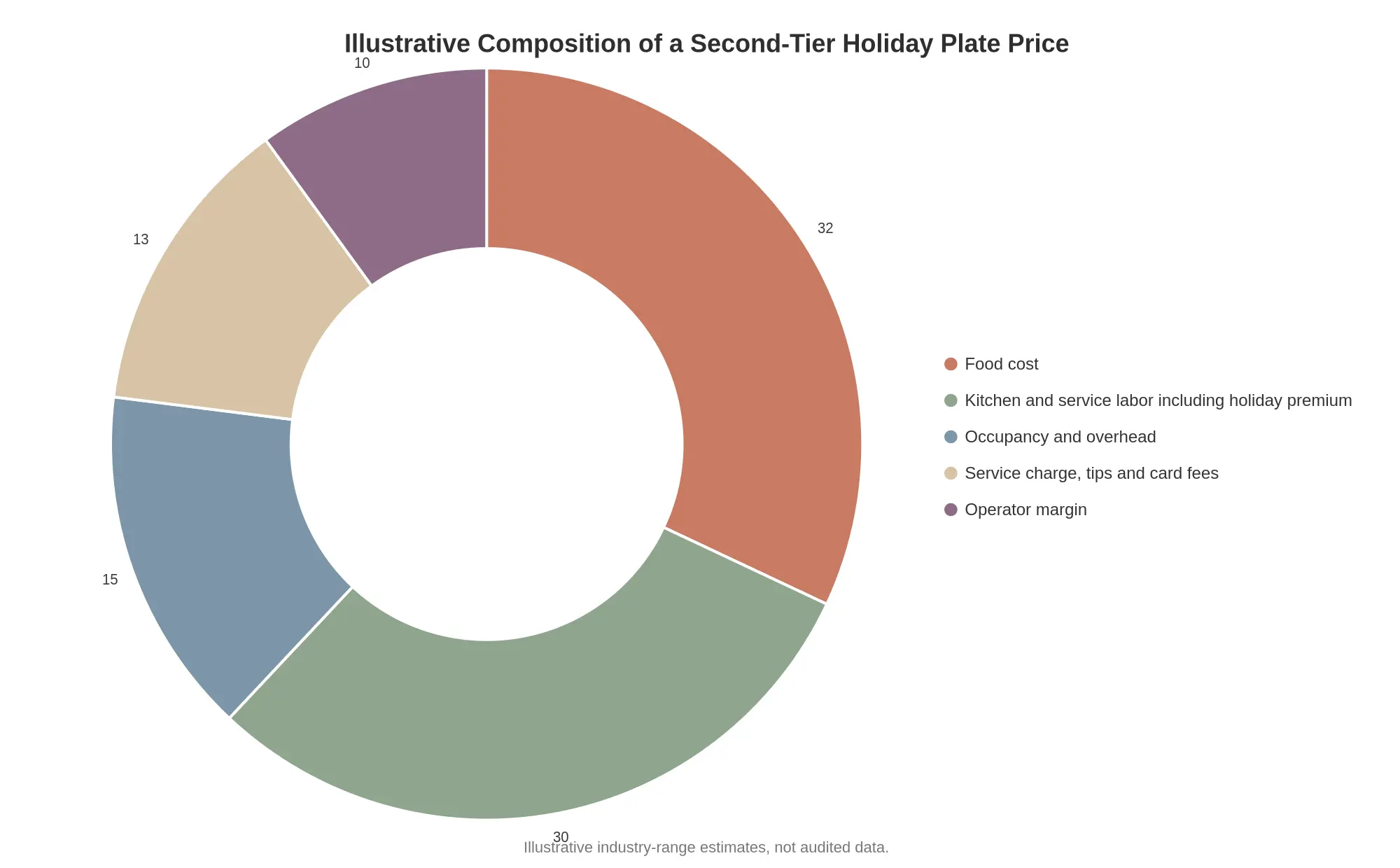
This split is illustrative only and shifts with menu format and party size.
The percentages total 100 and reflect broad industry-range estimates rather than audited figures from any single kitchen. Food and labor together take roughly 62 of every 100 dollars here, and that is the main reason the second tier sits only modestly above the first: the difference is absorbed by premium wages and a smaller seating count more than by lobster and truffles. Occupancy and overhead stay stubbornly fixed on a holiday, so the fewer covers a restaurant seats, the more of that fixed cost each plate carries. To see how menu format changes the mix, browse how the holiday menu is structured before you compare tiers.
What Actually Changes Between the First and Second Tier Menus
The structural differences show up first at the early seating. At many restaurants the cheaper option runs three courses with two or three entrée choices, while the second price tier adds a fourth course, a wider entrée spread, and often a carving station or seafood add-on the 4pm guests never see. Dessert and beverage move the same way: a single plated dessert with coffee at 4pm, a dessert duo or a welcome pour later.
So read the menu before you compare the number. On Thanksgiving prix fixe NYC listings, a $95 menu with a carving station and an included glass of wine is not the same purchase as a $95 menu of three courses, and the headline price tells you almost nothing about what lands on the plate.
Children’s pricing and portion sizes are where families feel holiday menu prices most sharply. The early tier often keeps a reduced kids’ plate and slightly smaller entrée portions, while the second tier frequently charges adult price above a set age and serves full-size plates built for a longer turn. Restaurants rarely label these tiers clearly at the table, so seeing how a holiday menu is actually laid out helps you spot the gap in a few seconds.
| Element | First seating menu (early tier) | Second price tier (later seatings) |
|---|---|---|
| Courses | Typically the shorter of the two | Usually one course more |
| Entrée choices | Two to three, fixed | Broader selection, sometimes a choice of two proteins |
| Carving / seafood add-ons | Absent or optional at extra cost | Often included |
| Dessert and beverage | One dessert, coffee or tea | Dessert duo, sometimes a welcome pour |
| Children’s pricing | Reduced kids’ plate common | Adult price above a set age |
| Portion sizes | Standard, slightly smaller | Full-size plates and larger cuts |
| Table turn | Tighter window, faster reset | Longer seating, more cushion |
What a higher tier does not guarantee is better food. Some restaurants run a shorter menu at the 4pm seating and a longer one later, but plenty of others run an identical menu at every seating and simply price by time slot, in which case the second price tier buys the clock rather than the kitchen. Ask which version you are booking before you assume the extra money is buying extra food.
A 4pm seating usually lands in the first tier, so it helps to know which line items push a quote upward before you confirm the table:
- Prime-time slot. A 6pm to 8pm seating sits at peak demand, so the per-person rate reflects the premium most diners pay for a traditional dinnertime table.
- Premium protein. Choosing prime rib or dry-aged turkey over the standard roast adds a supplement, since those cuts cost the kitchen considerably more per cover.
- Seafood course. Shrimp cocktail, oysters, or crab legs raise the price because shellfish is bought at daily market rates and rarely folded into a base menu.
- Extended courses. Extra soup, salad, or dessert rounds stretch the meal and increase food cost, so restaurants bill them as an upgrade rather than an inclusion.
- Beverage pairing. A wine or cocktail flight attached to dinner carries its own per-person charge, and the tier reflects that added service and inventory.
- Party size. Larger groups need more staff and more shared plates, and some rooms apply a higher per-head rate once a table exceeds six guests.
- Window or booth request. Guaranteed window or booth seating is limited inventory, so venues price that request in when holiday demand is strong.
- Holiday labor premium. Staff working Thanksgiving earn holiday wages, and part of that cost is passed through as a per-person surcharge on peak seatings.
- Flexible cancellation. A refundable deposit with relaxed terms means the restaurant is holding the risk of a late change, so it offsets that risk with a slightly higher per-person price.
- Deposit terms. A prepaid or non-refundable deposit sometimes buys a lower rate, since the restaurant keeps the money if plans fall through.
Most 4pm guests stay in tier one precisely because they skip several of these add-ons. If you want to see how such line items actually read on paper, it is worth reviewing a sample holiday seafood menu before you book.
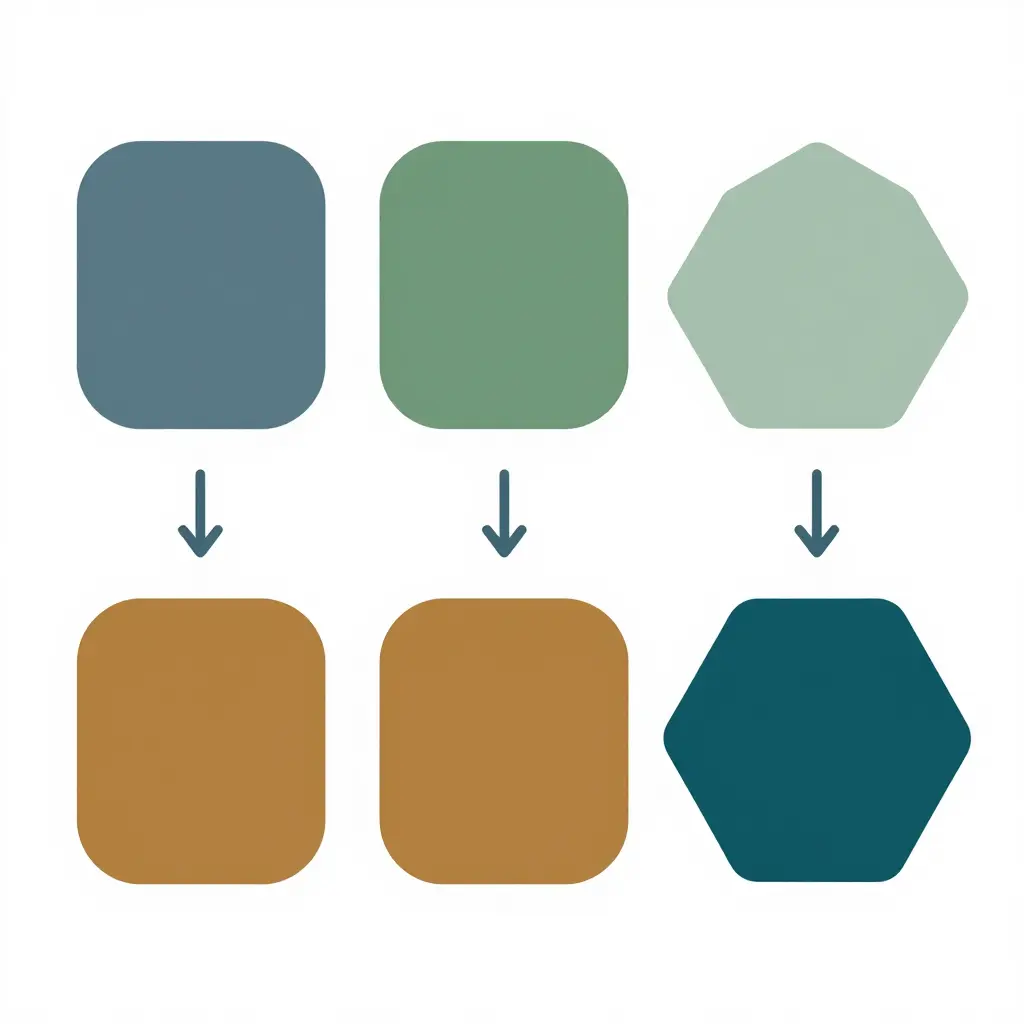
Your booking enters on the left and passes through three screens: the seating time you pick, the menu package attached to that seating, and the size of your party. Whatever survives all three is the tier you actually pay. A 4pm table often lands a tier below a 7pm table not because the turkey changed but because the slot, the package, and the headcount did.
The three blocks, left to right:
- First block – the time slot you choose (the 4pm seating is the earliest of the standard slots).
- Second block – the menu package tied to that slot.
- Third block – your party size, which locks in per-person pricing.
- Final shape – the price tier your reservation lands in once all three filters have done their work.
Laid out in sequence, holiday pricing stops looking arbitrary and starts looking like a routing problem.
How to Compare Price Tiers Before You Book
The number on a holiday menu is rarely the number you pay. Before you decide one Thanksgiving dinner NYC reservation is a bargain and another a splurge, convert every quote into the same unit: cost per person, all in. Start with the advertised per-person figure, add New York City sales tax (8.875% on restaurant meals), add any mandatory service charge or holiday administration fee, then divide by the number of adults in your party, not simply the headcount at the table, since children are usually priced on a separate scale. A $95 menu carrying an 18% service charge and tax lands closer to $122 per adult. A $115 menu with gratuity already built in comes out around $125, so the higher headline can be very nearly the same money. Do that arithmetic on every quote before you compare them side by side.
Then strip the beverages out of the comparison. Some prices include a welcome glass of sparkling wine, coffee, or a soft-drink package; others charge by consumption, and a few apply a beverage minimum on top of the food minimum. Ask for the beverage terms in writing: bottle pricing, corkage, and whether non-alcoholic drinks sit inside or outside the per-person rate. Money held up front needs the same discipline. Confirm whether the deposit is applied to the final bill or forfeited entirely, whether it is refundable and until what date, whether a minimum spend applies to the room or the table (and whether tax and service count toward it), and how wide the cancellation window really is. A 72-hour cancellation policy on a sold-out holiday seating is very different from a 24-hour one. For a sense of how one restaurant sets these terms, this breakdown of Mayflower’s reservation and deposit terms is a useful reference point for the questions to ask.
Finally, verify the length of the seating window, because it drives both value and comfort. The 4pm seating is often a fixed turn, commonly 90 minutes to two hours, while later seatings may run longer. Two hours at $110 per person is a different proposition from 90 minutes at the same price, especially with a slow-roasted turkey plate and a dessert course to get through. Ask when the table is expected back, and whether the kitchen paces courses to that clock.
The questions to ask the reservations desk
Call rather than relying on the booking widget, and work down this list:
- What exactly does the second price tier add over the first: a course, a carving station, a seafood opener, or simply a later seating time?
- Is the 4pm seating a fixed turn, and how many minutes do we have at the table?
- How are children priced, and up to what age?
- Can the kitchen substitute for dietary needs (vegetarian, gluten-free, allergies) without an upcharge?
- Is gratuity included in the quoted holiday menu price, and does the service charge replace the tip or come on top of it?
Write the answers down next to each quote. Once tax, service, beverages, deposit treatment, minimum spend, and seating length are normalized, the tiers stop being abstract and become comparable.
Booking Timeline for Thanksgiving Dinner in NYC
Timing decides whether you land the seating you want. Work backward from Thanksgiving Day with this schedule for Thanksgiving restaurant reservations NYC.
- Eight weeks out: Compare menus and second-tier prices across three to five restaurants, and note exactly which entrées, sides, and desserts each holiday package includes.
- Six weeks out: Shortlist two preferred seatings, ideally the 4pm and 6pm slots, then rank backup rooms by table size, noise level, and party fit.
- Four weeks out: Place the actual reservation and note the deposit terms, prepayment rules, and whether tax and gratuity are already folded into the quoted price.
- Two weeks out: Confirm the turn time and cancellation window in writing, then set a calendar reminder that fires before any penalty deadline.
- The week of: Reconfirm the booking by phone, verify headcount, seating time, and allergy notes, and ask whether a card must be presented.
- The day before: Plan an arrival buffer of 20 to 30 minutes for transit delays, parade crowds, and the check-in queue at the host stand.
- The day of: Arrive early, check in with the host, and restate your seating tier so the table is released without dispute or delay.
Prime evening slots go first, since a 6pm to 8pm table is what most groups ask for, and restaurants release only a limited number of tables into each price tier. The 4pm wave usually holds availability longer, which is why so many late planners end up there.
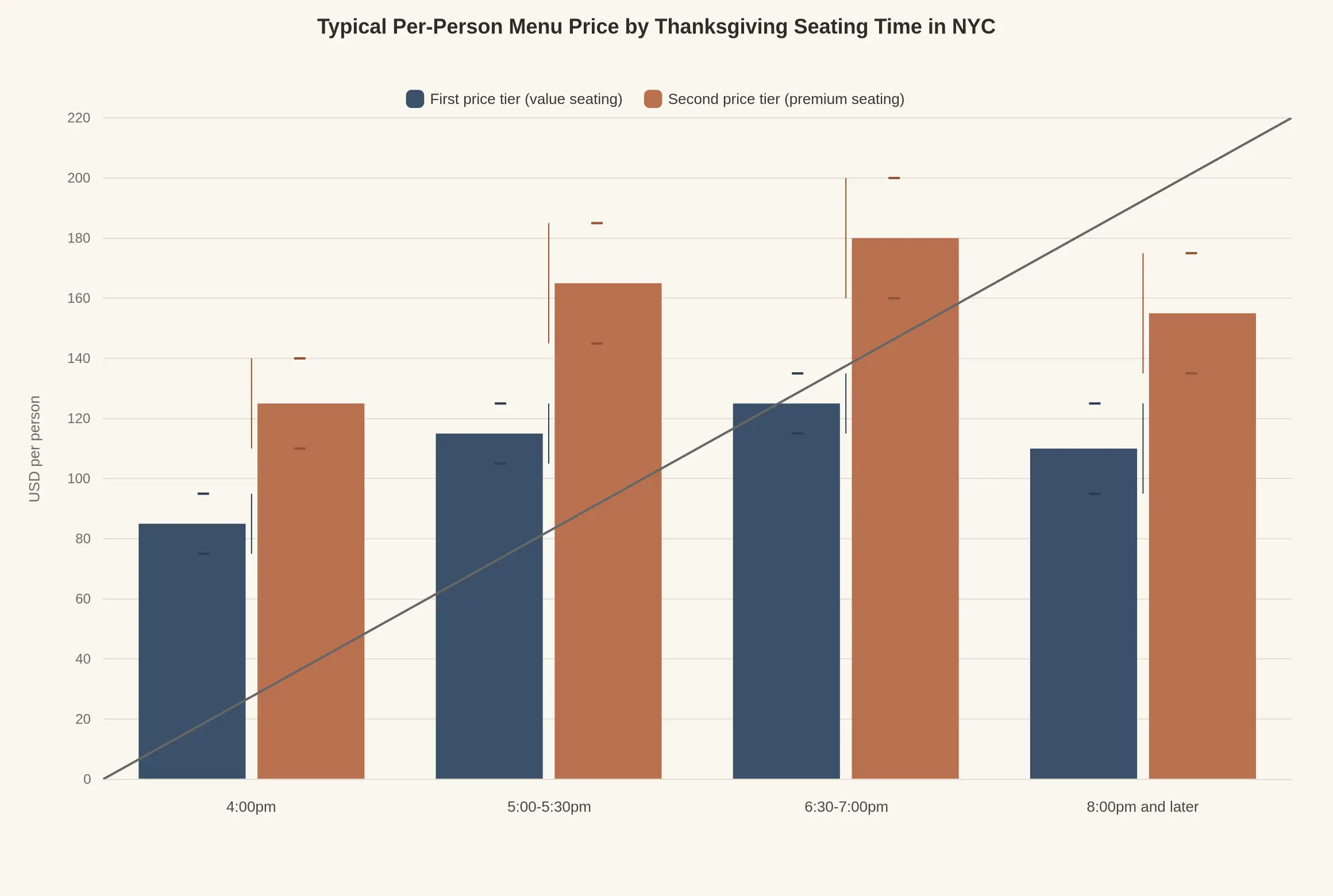
Figure 1. Typical per-person menu price by Thanksgiving seating time in NYC, with the first (value) and second (premium) price tiers shown as separate series; the values are illustrative typical ranges and individual restaurants vary.
Caption: The sharp jump between the 4:00pm seating and the evening seatings reflects tier position rather than portion size; the later menus are priced higher because of what and when they are served, not because diners eat more.
Timing and Logistics for a 4pm Thanksgiving Seating in NYC
Plan to walk in the door 10 to 15 minutes before your reservation time, not 30 and certainly not five. A 4pm seating is a fixed seating: the kitchen fires the whole room in waves, and the table in front of you is being reset for you specifically. There is no spare four-top waiting in the back if you run late, and unlike a regular dinner reservation, the host cannot slide you to 4:20 because the 4:20 slot does not exist. Arriving early gives you time to clear the host stand, hand off coats, and be seated calmly at 4:00 instead of sprinting through a crowded lobby. Arriving 40 minutes early is not helpful either, since most dining rooms are still finishing their setup.
Budget more travel time than you think you need. On Thanksgiving, the subway runs on a holiday or Sunday schedule, which means fewer trains and longer waits on many lines, plus the usual weekend track work and station closures. Street traffic is its own problem: the morning parade brings road closures across Midtown that often linger into the early afternoon, buses get detoured, and rideshare drop-off zones shift block by block. If you are coming from outside Manhattan, add 30 to 45 minutes to whatever your map app suggests, and plan to walk the last few blocks from a subway stop rather than counting on a car to reach the door.
Luggage and coats deserve their own plan. Visitors often show up with a suitcase or a stroller, and most New York dining rooms have limited coat-check space and no luggage storage at all. Check the restaurant’s published holiday policies before you go; details on bag handling and service timing are usually posted alongside the menu, similar to the holiday dining notes in resources such as Mayflower Restaurant holiday dining details. Travel light, bring one small bag per person, and expect the coat-check line to crawl in the first 15 minutes of a fixed seating.
The host stand will be crowded between 3:45 and 4:10. Have the reservation name, party count, and any allergy notes ready. If a party is late, most restaurants hold the table roughly 10 to 15 minutes, then either release it or compress the meal by pacing courses faster, and a deposit may be forfeited. A 4pm seating typically runs 1.5 to 2 hours, so your turn usually ends around 5:45 to 6:00, when staff need the room for the next wave. If you have a second activity (a movie, a train, a museum slot), leave at least 30 minutes of buffer after that end time.
| Clock time | What should be happening |
|---|---|
| 2:45-3:00 | Leave your starting point |
| 3:40 | Arrive in the neighborhood, walk the last blocks |
| 3:45-3:50 | Check in at the host stand, check coats |
| 4:00 | Seated and ordering |
| 5:45-6:00 | Turn ends; settle the check |
| 6:15 onward | Next activity, with buffer |
As a rule of thumb for Thanksgiving dinner NYC, work backward from the seating time: be at the door 15 minutes early, which means leaving your origin 45 to 60 minutes ahead if you are taking the subway and 75 minutes or more if you are driving or relying on a rideshare. If you cannot make that math work, book a later seating instead of gambling on a table that will not wait.
Chart: Relative Holiday Inventory Availability by Weeks Before Thanksgiving
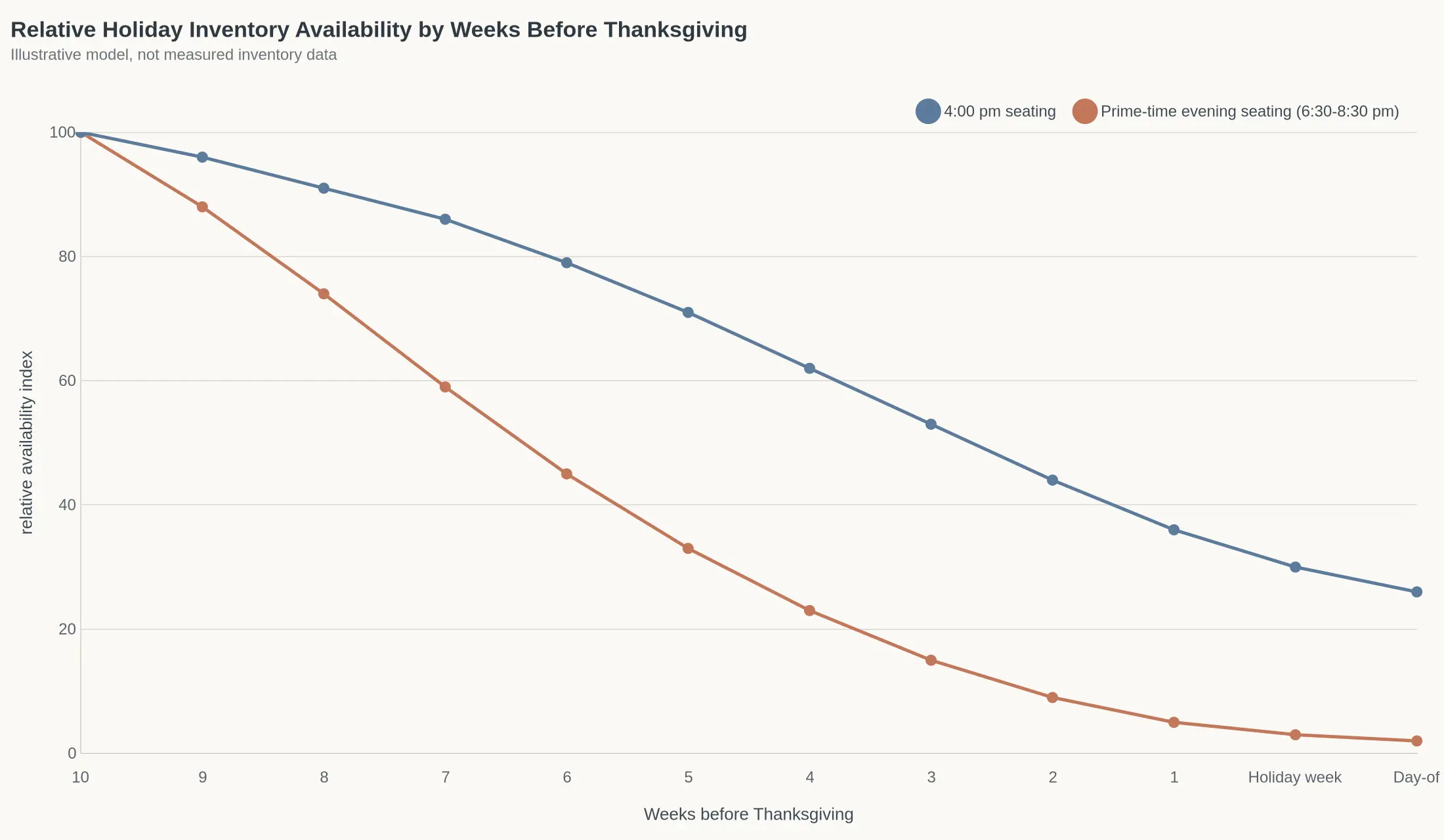
This is a model, not a measurement. Nobody publishes a live index of open holiday tables, so the two curves are a deliberately simple illustration of the shape reservation pressure tends to take. The 4:00 pm line slides down gradually and still has room well into the final weeks, while the 6:30-8:30 pm line falls off a cliff early: by three weeks out, prime evening inventory is already close to gone. Either way, the advice to planners is the same: treat the early seating as the low-stress lane.
The pattern matters because it is baked into how holiday seating tiers get built long before anyone calls to book.
Caption: Early seatings hold availability longer while evening seatings compress first. (Illustrative model, not measured inventory data.)
What the Final Bill Adds Beyond the Tier Price
The number quoted for the 4pm seating, or for the later tier behind it, is the menu price per person, and it is rarely the number that lands on your card at the end of the night. In New York City, sales tax of 8.875% applies to food and beverage and is added on top of the quoted holiday menu prices, so a $95 menu becomes roughly $103.40 before anything else happens. Then comes the automatic gratuity: most restaurants attach an 18-20% service charge to parties of six or more on Thanksgiving, and a growing number apply it to every holiday reservation regardless of size. In New York, a service charge is not legally a tip. It is revenue to the restaurant, even when the house passes part of it along to staff, so ask which one you are looking at. If it is a genuine gratuity, leaving the tip line blank is reasonable; if it is a house charge, tipping on top is your judgment. Scan the bill and the reservation terms for administrative fees, credit-card processing fees of 2-3%, coat check at a few dollars per item, and any bar minimum tied to your seating time.
The deposit needs the same scrutiny. Confirm in writing, at booking, whether it is credited against the final bill or forfeited, whether it converts into a cancellation penalty inside a stated window, and whether it is charged per seat or per table. Beverage and bar minimums are easy to miss: a per-person drink minimum is usually calculated before tax and service charge, so the real spend is higher than the minimum suggests. Children’s menu pricing cuts the per-head food cost, but the service charge percentage typically still applies to the adult rate or to the table total, and some restaurants require children above a certain age to order the full menu. For takeaway and leftovers, ask before you sit down whether the holiday menu travels at all, whether containers are provided, and whether any course is dine-in only.
To estimate the true per-person cost, take the tier price, multiply by 1.08875 for tax, then add the service charge and any listed fees. A mandatory service charge may itself be taxable, which adds another small slice. The table below shows the arithmetic on a hypothetical menu price; swap in your own quote and you have a working estimate. Multiply by the number of seats and compare that figure, not the headline tier, against your budget. In practice, the gap between the 4pm tier and the later one is often smaller than the gap created by these add-ons, so the add-ons are what decide the evening. If you want a sense of how holiday menu pricing is itemized in practice, read the fine print before you commit.
| Line item | Calculation | Example on a $95 menu price |
|---|---|---|
| Quoted holiday menu price | tier price per person | $95.00 |
| NYC sales tax | menu price x 0.08875 | $8.43 |
| Automatic service charge (18-20%, larger parties) | menu price x 0.20 | $19.00 |
| Tax on the service charge, if applied | service charge x 0.08875 | $1.69 |
| Administrative or card fee, if listed | menu price x 0.03 | $2.85 |
| Estimated total per person | sum of the above | $126.97 |
A simple rule of thumb for Thanksgiving dinner NYC: budget roughly 1.30 to 1.35 times the quoted tier price per adult once tax, service charge and fees are included, and add drinks, coat check and any minimums separately.
Thanksgiving Dinner NYC: Frequently Asked Questions
Holiday seating times and menu prices raise practical questions, especially when a 4pm seating costs less than an 8pm one. The answers below cover tiered pricing, deposit rules, and booking timelines for Thanksgiving restaurant reservations NYC.
Is the 4pm seating cheaper than later seatings?
Yes, the 4pm seating is typically the cheapest seating on a tiered holiday menu. Restaurants price it lower because the early service finishes before peak dinner demand, so the room is easier to staff and turn over. Expect the same turkey-and-sides format, sometimes with a slightly shorter menu.
Why is an evening seating priced as a second tier?
An evening seating falls into a second price tier because it sits inside prime dinner hours, when demand and labor costs both climb. A 6pm to 8pm table is the slot most groups want, and kitchens schedule extra staff for it. That premium is built into the menu price, not added at the door.
How far in advance should NYC holiday reservations be made?
Thanksgiving restaurant reservations NYC should generally be made four to six weeks in advance. Popular dining rooms reach capacity by early November, and larger groups of six or more often need even more lead time. The 4pm seating is usually among the last to sell out, so late planners have a realistic chance there.
Are holiday prix fixe deposits refundable?
Deposits on holiday prix fixe menus are often refundable only if you cancel outside a stated window, commonly 72 hours before the reservation. Some restaurants refund the deposit as a credit rather than to your card. Read the cancellation terms at booking and confirm whether the deposit is applied to the final bill.
Do children pay full holiday price?
Children do not always pay the full holiday price, though many restaurants do charge it for every seat. Others offer a reduced kids’ rate, typically for children around ten or twelve and under. Ask when you book, and check whether the children’s option is a smaller portion of the same menu or a separate plate.
Is walk-in dining realistic on Thanksgiving?
Walk-in dining is rarely realistic on Thanksgiving at full-service NYC restaurants, because most seatings are pre-sold and the room runs at capacity. Your best options are bar seating, which is sometimes held for walk-ins, or arriving right at opening. Calling ahead the same morning to ask about cancellations also helps.
What is the difference between a service charge and a tip?
A service charge is money the restaurant collects and distributes according to its own policy, while a tip is a voluntary amount you leave for staff. A service charge may fund benefits, admin costs, or a pooled wage, and it does not always reach your server as a gratuity. Ask the manager how it is split before adding a tip.
Key Takeaways Before You Book
- The 4pm seating is the first tier, and it is the easiest of the dinner slots to book. It also carries the tightest turn of the evening, so plan on being done and out before the second wave of tables arrives.
- The second price tier is not arbitrary. It stacks three real costs into one number: a holiday labor premium, a richer multi-course menu, and genuine prime-time demand from diners who want a later, more relaxed evening.
- Budget on the full per-person cost, not the headline price. Tax and service charge sit on top of the advertised menu figure, and together they can add a meaningful amount once the bill is totaled.
- Confirm the deposit and cancellation terms before you commit. Holiday reservations frequently involve a card hold, a prepayment, or a defined cancellation window, and you want to know exactly what happens if plans change.
If you want to see how this information is normally presented, compare a few reference pages. A broad overview of a seafood restaurant’s offerings usually shows which dishes rotate by season and how a kitchen frames a holiday spread. A standard restaurant information page tends to cover hours, seating arrangements, and reservation policy in plain language. Menu pages, such as this published Smithfield, NC menu, show how individual houses list courses, portion expectations, and price points, while a location page like the Savannah restaurant’s page describes a single venue’s rooms and seating flow.
The 4pm Thanksgiving seating is a trade-off between price, pacing, and prime time. Understanding the second tier is what lets you choose deliberately instead of reacting to whatever is left.