
Thanksgiving Dinner Restaurants Open: Why Prepaid Deposits Matter
Every November, a lot of Americans skip the kitchen and let someone else deal with the turkey, stuffing, and pie. Finding Thanksgiving dinner restaurants open on the holiday is easier than it used to be, but the booking side has changed: many places now want money up front before they confirm your table.
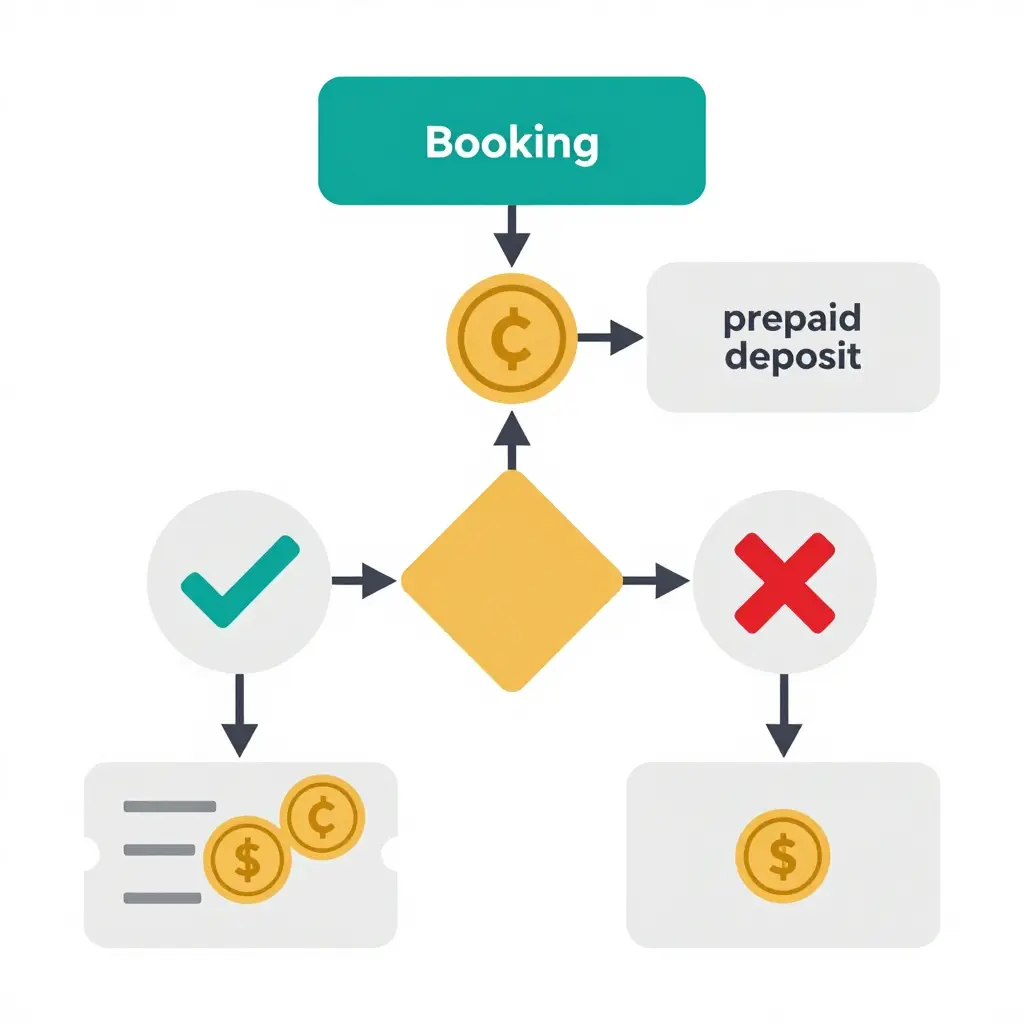
A prepaid deposit is money you pay up front to hold a reservation, and it usually comes off your final bill. A no-show fee is what you pay if you reserve a table and never arrive, or cancel too late. Restaurants use both to plan food, staffing, and seating on one of the busiest dining days of the year.
If you would rather not cook, or you are traveling without a kitchen, the fine print matters. It is the difference between a relaxed holiday meal and an unexpected charge on your card. Some establishments, such as seafood restaurants that welcome holiday diners, spell out deposit and cancellation terms before you book.
How Prepaid Deposits Work on Thanksgiving
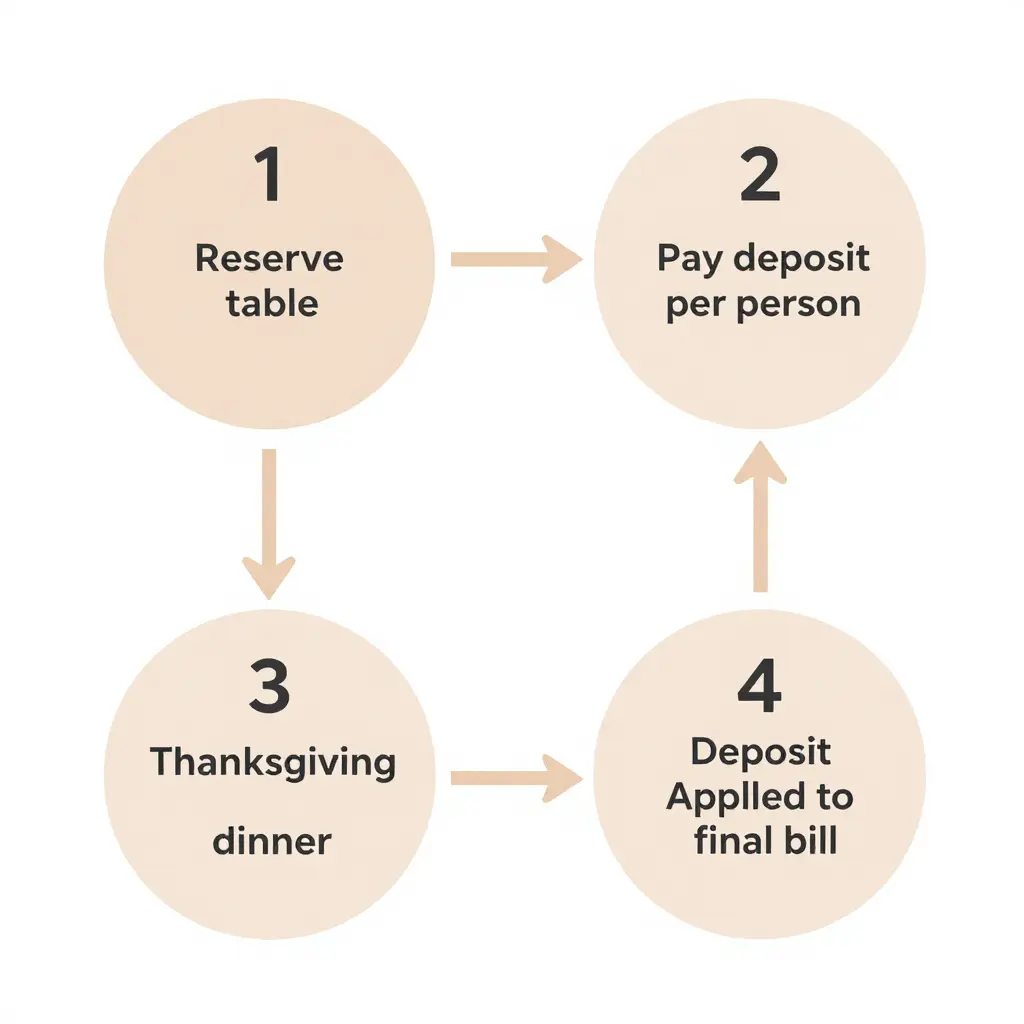
Book a table for a high-demand holiday like Thanksgiving and the restaurant may collect a partial payment up front. Instead of holding your spot under a name alone, it asks for money to lock in the booking. In most cases that money is not an added charge; it comes back to you against the final bill.
Why restaurants charge a deposit
Thanksgiving fills more seats than almost any other day. Many kitchens commit to a fixed-price holiday menu, schedule staff to work the holiday, and buy premium ingredients weeks in advance. If a guest cancels at the last minute or never shows, that seat is hard to refill: the food is already bought and the server is already on the clock. A deposit offsets some of that risk and keeps tables with diners who plan to use them. It has become a standard part of holiday dining policies.
How the amount is quoted
Deposits are almost always quoted per person, so your total depends on headcount.
- Per-guest pricing: venues usually set a fixed dollar amount for each diner, sometimes tied to the price of the holiday menu.
- Party size adds up: a table of four is typically charged four times the per-person figure.
- Occasional alternatives: a few restaurants set a minimum spend instead, which works much the same way.
How it is applied to the final bill
When you eat, the deposit is not added on top. It is credited toward your bill, so you pay only the remaining balance, plus tax, tip, and any drinks or extras you ordered separately.
What happens when you show up
Honor the reservation and the deposit simply becomes part of your payment. You get the meal you booked, and the money you paid up front is folded into the check. Diners who arrive on time and dine as planned rarely think about it again, beyond the smaller balance at the end. For travelers scanning Thanksgiving dinner restaurants open near their destination, knowing how the setup works takes the mystery out of booking.
A quick clarification
- Your deposit is generally not refundable if you cancel late or fail to appear, which is why it is sometimes confused with a no-show fee.
- It is usually fully applied to your bill when you attend, not held back as an extra surcharge.
Put simply: a prepaid deposit confirms your Thanksgiving table, protects the restaurant from empty seats, and then pays for part of your dinner once you arrive.
What that looks like in practice varies by venue.
| Policy Aspect | Typical Practice | What It Means for the Diner |
|---|---|---|
| Deposit amount per person | Ranges from about $10 to $50 per guest, often higher for fixed-price or buffet menus | Expect to pay a set amount for every seat in your party, not one hold for the whole table |
| Deposit applied to the final bill | Usually credited toward the total, though some venues treat it as a separate booking fee | In most cases the money is not extra; it comes off what you owe at the end |
| Deposit refundability | Commonly nonrefundable, or refundable only if canceled several days to a week ahead | Read the cancellation window carefully; last-minute changes often mean losing the deposit |
| Deposit transferability to another guest | Sometimes allowed if the venue is notified in advance and the new guest takes the same seat | You may be able to pass your spot to a friend, but only with the restaurant’s approval |
| Deposit forfeiture on no-show | Frequently forfeited in full when a guest or the entire party fails to arrive | Missing your reservation without notice usually means waving goodbye to that money |
The deposit is really your commitment to show up, and it usually counts toward the check rather than being lost money. Confirm the cancellation and transfer rules before you pay, and review a sample restaurant’s dining details so you know what the holiday menu and policies actually say.
Why Restaurants Require Prepaid Deposits and No-Show Fees on Thanksgiving
Thanksgiving is one of the single busiest days of the year for dining out. For the many people who would rather spend the holiday at a table than at a stove, there are plenty of Thanksgiving dinner restaurants open across the country. But when those diners start booking, they often notice a new line in the reservation details: a request for prepaid deposits and a stated policy on no-show fees. Knowing why those policies exist removes most of the surprise.
The core issue is supply and demand. Most restaurants have a fixed number of seats and only so many turnover cycles in a holiday evening, so a single night may serve a fraction of the guests who want a table. When demand runs that far ahead of capacity, a reservation becomes a valuable slot, and restaurants use deposits to protect it.
Thanksgiving also carries costs an ordinary night does not. Kitchens often prepare a set menu built around turkey, sides, and specialty dishes, which means food is purchased, prepped, and sometimes partially cooked in advance based on confirmed head counts. Staffing works the same way. Many employees give up part of their holiday to work, and they are scheduled and paid based on expected reservations. A reservation that never arrives leaves those costs stranded.
The most direct concern is the empty table. A no-show seat cannot easily be refilled, especially on a day when nearly everything is booked. That lost cover is wasted preparation plus lost revenue. A deposit or no-show fee shifts part of that risk back to the guest and gives confirmed diners a reason to cancel in time, so the restaurant has a chance to rebook. For guests, exploring the Mayflower Seafood dining options can be a useful way to see how holiday reservations are typically handled.
In practical terms, restaurants put these policies in place for a few operational reasons:
- Guaranteed head counts so food purchasing and prep match actual demand
- Protection of staffing costs for employees scheduled specifically for the holiday
- Recovery of losses from reserved tables that go unused
- Encouragement of early cancellations so open seats can be rebooked
Seen this way, deposits and no-show fees are less about penalizing diners and more about keeping a packed holiday service financially workable for everyone involved.
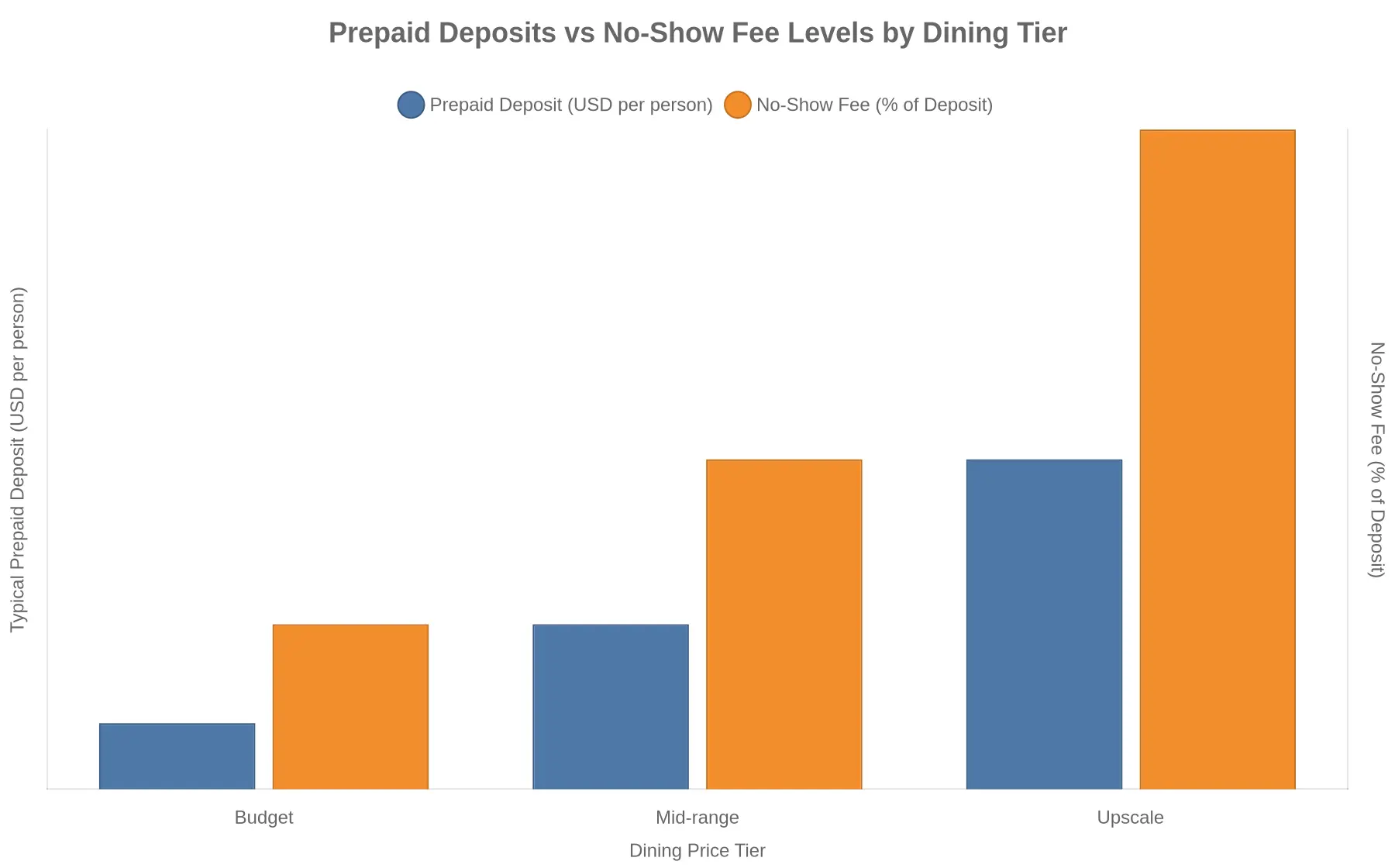
This chart is illustrative, not survey data. It shows how prepaid deposits and no-show fees tend to scale together across common Thanksgiving dining price tiers. As the deposit amount rises from roughly $10 per person at budget spots to around $50 at upscale restaurants, the typical no-show fees climb proportionally, often reaching the full deposit at the higher end. In other words, the more a restaurant asks you to put down in advance, the steeper the penalty is likely to be if you don’t show up – so it pays to confirm your holiday plans before you book.
Smart Tips for Booking Thanksgiving Dinner With a Deposit
Many Thanksgiving dinner restaurants open their books weeks ahead, and a growing number now require prepaid deposits to hold your table. That is reasonable given holiday staffing and food costs, but it also means you should read the fine print before you pay. Start by comparing spots like Mayflower Seafood as you build your shortlist, then use these tips to protect your holiday budget.
- Confirm the exact deposit amount. Ask whether the deposit is charged per person or per table, because the difference is huge for a large group. A $20-per-person charge on a party of ten is $200 you need to be ready to spend.
- Ask about the cancellation window. Find out the exact deadline for canceling to get your money back, and mark it on your calendar. Policies often tighten sharply in the final 72 to 48 hours before the holiday.
- Check the no-show fees. No-show fees can be separate from your deposit, so ask whether you will be charged again if your party does not arrive at all. Get that number in writing so there are no surprises on your statement.
- Verify party size rules. Some restaurants require every guest in a group to sit on one reservation, while others cap tables at six or eight. Confirm the maximum headcount and whether young children count toward the total.
- Request written confirmation of the holiday dining policy. A quick email summarizing the deposit, cancellation terms, and no-show fees protects you if the person who booked your table is not working on the day. Keep that message until after your meal.
- Ask how the deposit applies to the bill. Clarify whether the deposit comes off your final total, is credited per person, or is forfeited if you spend less than expected.
- Confirm your seating time and grace period. Holiday seatings often run in set windows, so ask how long your table is held if you are running late.
A few minutes of questions now beats a stressful and expensive surprise on Thanksgiving Day.
Cancellation and Rebooking Policies for Thanksgiving Reservations
Because prepaid deposits lock in tables, staff, and ingredients, holiday dining policies tend to be stricter than on an ordinary night. Knowing the rules before you book can save you both money and frustration.
Common Notice Windows
A reservation is usually firm once the deposit is paid. Many venues offer a full refund when you cancel well ahead, often 14 or 21 days before the holiday. As the date approaches, the window narrows and the refund shrinks.
| Notice window | Typical outcome |
|---|---|
| Cancel 14+ days ahead | Full refund of deposit |
| Cancel 7-13 days ahead | Partial refund or dining credit |
| Cancel 48-72 hours ahead | Credit only, refund unlikely |
| No-show with no notice | Deposit forfeited as no-show fees |
The exact numbers vary by restaurant, so confirm them when you make the booking.
Partial Refunds and Credits
Some restaurants return a portion of the deposit and keep the rest to cover seats that go unused. Others issue a credit toward a future visit instead of cash. Credits often carry an expiration date, so read the terms before you accept one.
Transferring a Prepaid Deposit
A deposit can sometimes move to another date, another time slot, or even another guest in your party. Rebooking is easiest when you ask early and the holiday is not fully booked. Weekend and peak-hour transfers may be denied or carry a small change fee.
Weather and Travel Disruptions
Genuine disruptions, such as winter storms, flight cancellations, or road closures, are usually handled case by case. Many restaurants waive no-show fees and offer a credit when you can show documented disruption, but there is no universal rule. Call as soon as you know you cannot make it.
Reading the Fine Print Before You Book
If you are comparing venues, review each restaurant’s policies in advance. You can check recent Mayflower Seafood reviews in Winston-Salem to see how a location applies its deposit rules in practice. It also helps to browse the restaurant’s main location page for contact details and current holiday terms, so you know who to call if your plans change.
Book early, confirm the notice window, and ask about transfers and weather exceptions up front. A few minutes of reading now can protect your deposit later.
How Diners Typically Handle Thanksgiving Reservations
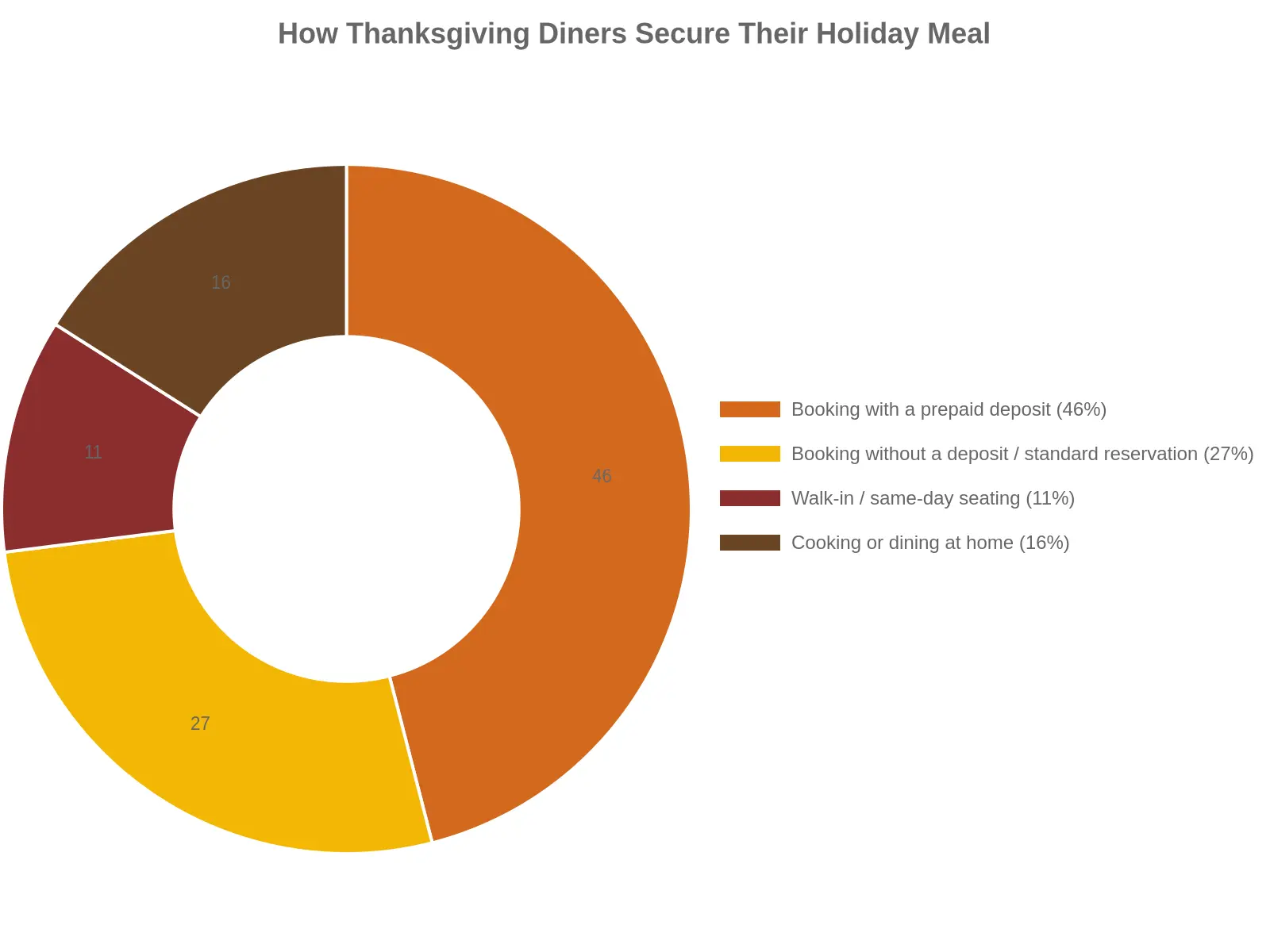
The chart below breaks down how holiday diners secure their Thanksgiving meal. The figures are illustrative, meant to show general patterns rather than exact shares.
As the doughnut chart shows, roughly 46% of Thanksgiving diners book with a prepaid deposit, making it the single most common path to a table. That pattern fits popular Thanksgiving dinner restaurants open on the holiday, where a prepaid deposit secures a seat and doubles as protection against no-show fees when guests change plans late. Standard reservations without a deposit, walk-ins, and those who cook or dine at home account for the rest, though walk-in seating is by far the smallest slice given how quickly holiday tables fill.
What This Means for Your Holiday Plan
- Book early and expect a deposit. If you have your eye on a busy spot, assume a prepaid deposit will be part of the deal.
- Understand the no-show policy. A deposit often ties directly to no-show fees, so confirm the cancellation window before you commit.
- Walk-ins are a gamble. With only a small share of diners seated that way, calling ahead is the safer bet.
- Compare before you choose. Reviewing policies ahead of time helps you avoid surprises at checkout. To see the kind of details worth checking, you can explore how holiday dining works at Mayflower Seafood.
Frequently Asked Questions About Thanksgiving Deposits and No-Show Fees
Are prepaid deposits normal for Thanksgiving dinner?
Increasingly, yes. Because Thanksgiving is one of the busiest dining days of the year, many Thanksgiving dinner restaurants open on the holiday ask for prepaid deposits to reserve your table. The deposit holds your seat and helps the kitchen plan food and staffing with accuracy. For diners, it is a small commitment that locks in a spot on a day when tables disappear fast.
What happens if I cancel?
It depends on how far ahead you cancel. Full refunds usually require two weeks or more of notice. Closer to the holiday you may get a partial refund or a dining credit, and inside the final stretch, often 48 to 72 hours before the reservation, you generally forfeit the deposit. Deadlines vary by venue, so read the policy when you book.
Is the deposit refundable?
Sometimes, but not always. Some places apply prepaid deposits entirely to your final bill, which makes them a credit toward your meal rather than a refund. Others treat them as non-refundable booking fees. A few will refund an early cancellation but keep the money for last-minute changes.
How much is a typical no-show fee?
No-show fees generally range from about $10 to $50 per person, and some prix-fixe holiday menus charge a flat fee per reserved seat. The fee exists because an empty table on Thanksgiving is very hard to refill. If your plans change, calling ahead can often help you avoid the charge.
Can I transfer my reservation?
Often, yes, but it requires notice. Many restaurants allow you to move your booking to another time or pass it to a friend if you contact them in advance. Transfers are usually easiest before the cancellation deadline, so reach out as soon as you know your plans have shifted.
Do all restaurants require a deposit?
No. Smaller, walk-in-friendly spots and casual diners may seat guests without any upfront payment. That said, popular holiday venues and those serving fixed Thanksgiving menus almost always do. When in doubt, ask when you call or book online.
Do no-show fees apply if I arrive with fewer guests?
Possibly. Some restaurants charge per reserved seat, so dropping from six diners to four could still trigger a fee for the two empty spots. Let the restaurant know about party-size changes as early as you can to avoid surprises on the bill.
The Bottom Line
Prepaid deposits and no-show fees are how busy holiday restaurants protect their tables. Read the fine print, cancel early when needed, and confirm any changes by phone. A little planning keeps your Thanksgiving meal relaxed and fee-free.
Final Thoughts for Thanksgiving Diners
Booking a holiday meal out is its own kind of planning task. Many Thanksgiving dinner restaurants open on the holiday now rely on prepaid deposits and no-show fees as standard holiday dining policies. These charges exist for a practical reason: Thanksgiving service requires owners to stock extra food, schedule additional staff, and hold tables that would otherwise go to walk-in guests. When a reserved party never arrives, the restaurant absorbs the full cost of that empty seat.
For diners, the takeaway is straightforward. Before committing, confirm three details: the exact deposit amount and how it is applied to your final bill, the cancellation window during which a refund is still possible, and the refund terms if your plans or arrival time change. Ask whether taxes, gratuity, or a prix-fixe minimum are already included, and keep the confirmation in writing. A few minutes of questions now can prevent an unwelcome surprise on your statement weeks later.
If you would prefer not to cook at home, reserve early, read the deposit and cancellation terms before paying, and choose a restaurant whose policies you understand and accept. Reviewing recent diner feedback can help you judge whether a venue handles holiday bookings fairly and clearly.
Planning ahead and asking the right questions keeps the focus where it belongs: enjoying a relaxed holiday meal. Being informed about deposits and fees is simply part of dining out on the holiday.